
Aquarius I: Stardust and Exile
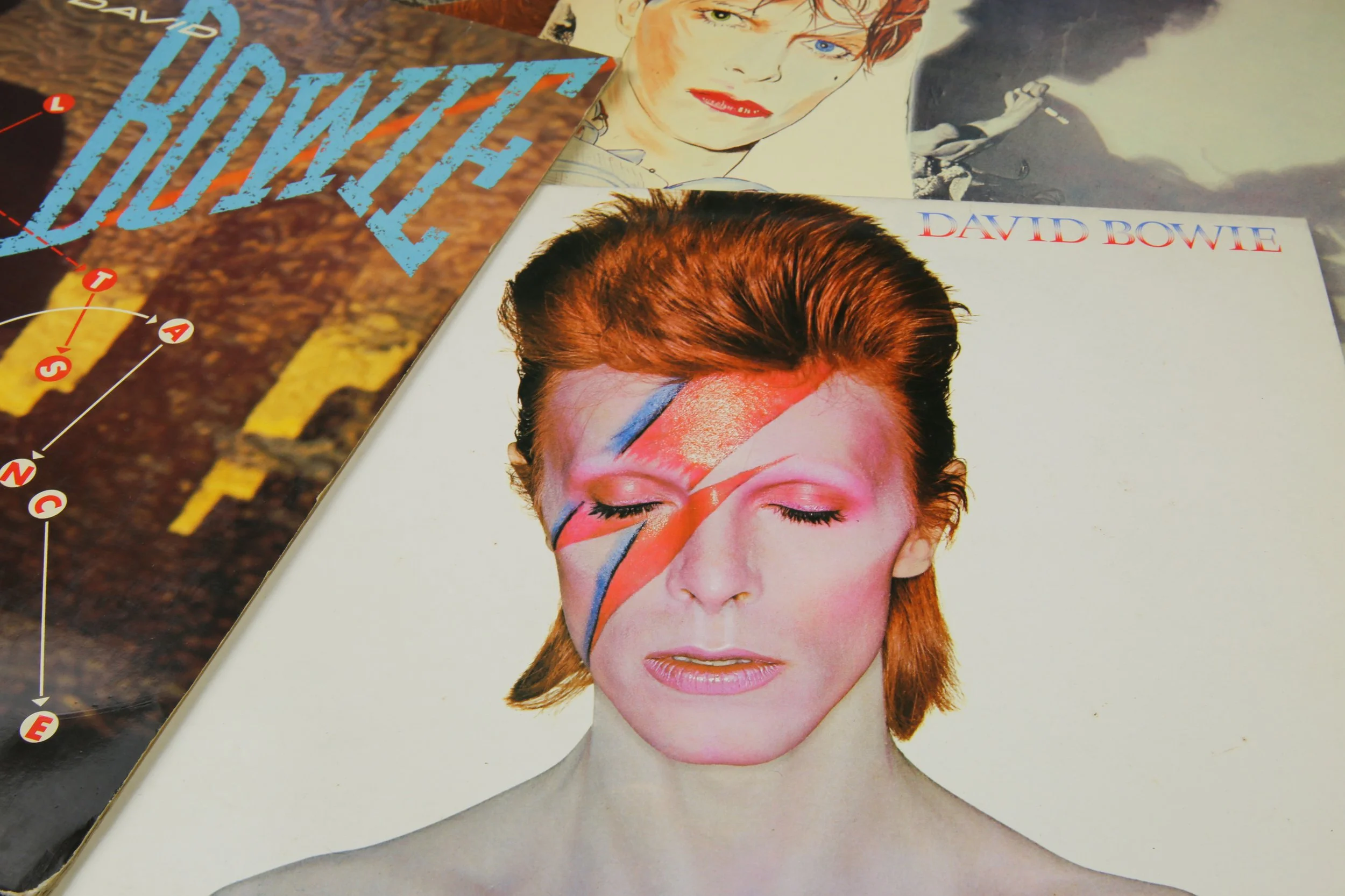
Dreamstime.com
In the video and expanded blogpost below, I explore Aquarius I, the first decan of Aquarius and the moment where separation from cultural norms begins. This is the point in the zodiac where the choice is made to step away from what is familiar and move toward something unknown. Aquarius I marks the beginning of the outsider’s path.
At its core, Aquarius I deals with exile, conflict, and the tension between relationship and vision. Ruled by Saturn and Venus, this decan raises questions about what must be left behind in order to pursue new ideas. The Five of Swords captures this dynamic clearly, showing how clarity and forward movement can come with loss.
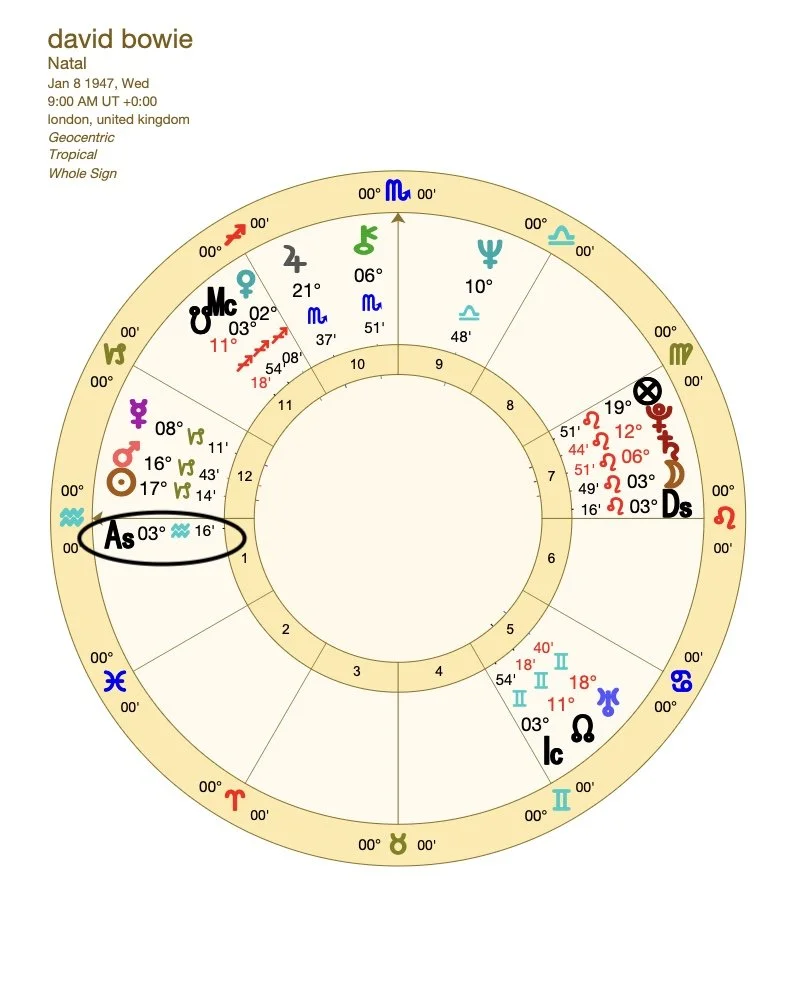
In the video, I look at the Rider–Waite tarot imagery, Saturn and Venus rulerships, and the role of Geburah on the Tree of Life. I also examine the chart of David Bowie and his creation of Ziggy Stardust as an example of Aquarius I themes: separation from the norm, creative risk, and the cost of innovation.
Transcript (revised and expanded)
Hi, this is Cathy Gnatek. I’m continuing my series on the 36 decans of the zodiac, and today we’re looking at Aquarius I, the first 10 degrees of the sign.
Aquarius is, in many ways, the sign of the outsider. Like Capricorn, it’s ruled by Saturn — the planet of boundaries, restrictions, and endings — the force that defines what’s included and what’s excluded. Capricorn, as an earth sign focused on achievement and building something solid in the world, tends to work within culture. It creates structure and success inside the existing system.
Aquarius comes right after Capricorn and begins to step away from that structure. It questions cultural norms and may even reject them to bring something new into the world.
With Aquarius I, we’re at the very beginning of that shift. This is the first movement away from what’s known and familiar into the unknown. It’s the decision to leave accepted norms behind and move toward something that challenges or reshapes them. People with planets or important points here often wrestle with themes of exile — what it means to feel separate, or to step away from certain relationships to have the freedom to explore new ideas.
The rulers of this decan, in addition to Saturn ruling the whole sign, are Saturn and Venus. That pairing already tells us a lot. Venus governs love and relationship, while Saturn can bring endings or separation. Part of the story here can involve tension in relationships, or the need to step back from certain connections to stay true to one’s vision.
We’ll be looking at the tarot card associated with this decan, the Five of Swords, and the Tree of Life — specifically the number five, Geburah — which again connects to themes of conflict and cutting away to make space for new creative expression.
I’ll use David Bowie as an example of someone with his rising degree in this part of the zodiac. There’s a lot we could say about him. I hope you enjoy the video, and if you do, I’d really appreciate it if you like and subscribe. I’m trying to grow my channel right now.
The Myth of Ganymede
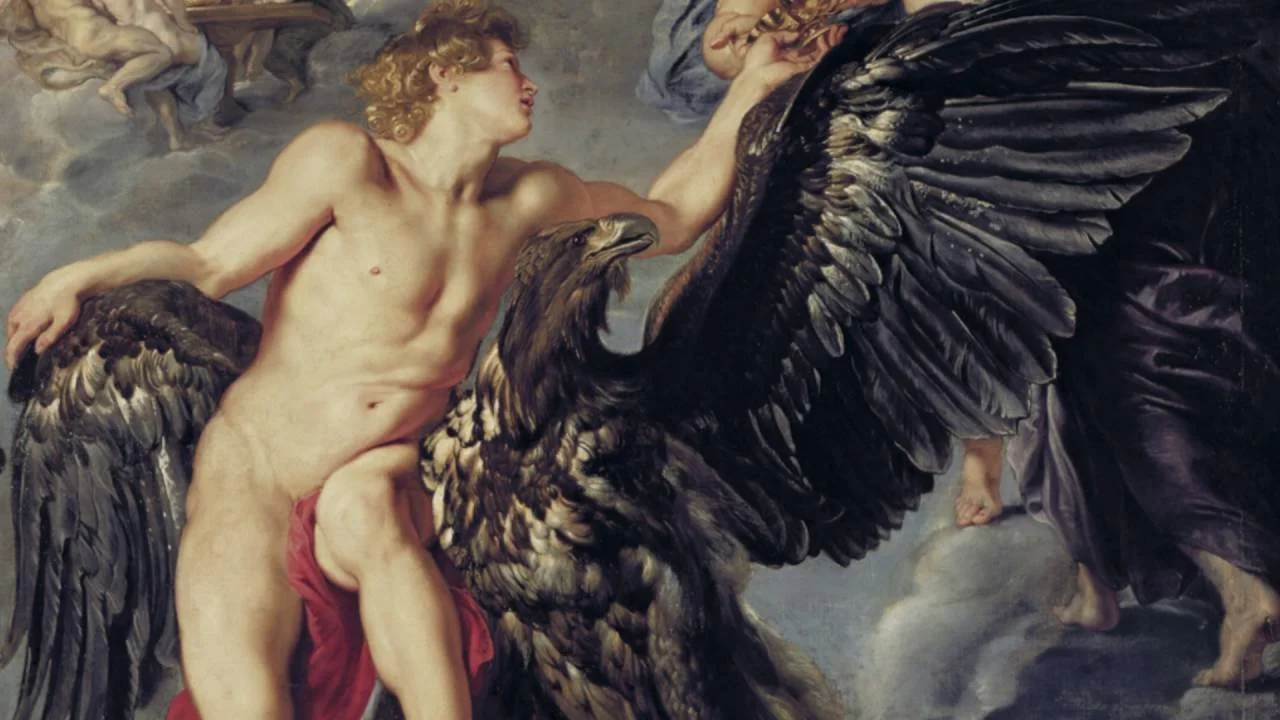
First, let’s talk about the myth associated with Aquarius: the story of Ganymede. It gives a strong sense of the sign’s overall tone. In the ancient Greek myth, Zeus — head of the pantheon — transforms himself into an eagle, swoops down to Earth, and carries off a beautiful young man named Ganymede. He brings him up to Mount Olympus to serve as cup bearer to the gods, pouring nectar and ambrosia. Ganymede is lifted into a higher realm.
You can immediately feel the Aquarian theme. There’s a movement away from the ordinary human world toward something elevated, ideal, even divine. Aquarius is often drawn toward a larger vision, something beyond the personal. In the myth, Ganymede is singled out. He’s chosen. There’s a sense of being favored or set apart.
Dreamstime.com
But there’s another side to the myth. Ganymede is taken from his home, from his people. There’s a loneliness in that. He may be among the gods, but he’s no longer among his peers. That theme of being lifted and set apart — both special and separate — shows up strongly in this first decan.
Moving beyond the myth and looking at Aquarius itself, we’ve already talked about Saturn: boundaries, limits, drawing lines, sometimes cutting things away. Aquarius carries that Saturnian tone. It’s also a fixed sign.
That fixed quality gives Aquarius staying power. It’s not just a quick burst of rebellion. It can harden into a system, an ideology, or a framework meant to serve humanity. Aquarius isn’t different just for the sake of being different. It often wants to build something that applies broadly — something that benefits the collective.
Karl Marx is a good example. He had his rising degree in Aquarius. When he wrote The Communist Manifesto, he wasn’t simply offering an opinion. He was outlining a full system — a vision of society based on the idea that everyone is equal and should be treated equally, without class divisions. That kind of large-scale, structural thinking in service of humanity reflects Aquarius, especially with its fixed quality behind it.
Another helpful way to understand Aquarius is to look at its opposite sign, Leo. Opposites in astrology highlight each other.
Leo is a fire sign ruled by the Sun. The Sun is the center of our solar system. Everything revolves around it. It shines and radiates warmth and light. Leo carries that feeling of, “Here I am.” There’s a natural desire to express, to create, to be seen. That’s simply the healthy solar impulse.
Saturn and Venus, Decan Rulers
Aquarius, ruled by Saturn, has a very different tone. Saturn is heavier, cooler, more distant. Aquarius steps away from the center. It de-centers itself. It says, “It’s not about me. It’s about the larger vision. It’s about the greater good.” Rather than being the star, Aquarius often wants to serve something bigger than personal recognition. Seeing that polarity — Leo at the center, Aquarius stepping back — helps clarify the Aquarian energy.
When we narrow this down to Aquarius I, the first 10 degrees, we look at the decanic rulers for more detail. The whole sign is ruled by Saturn, and this first decan is ruled by Saturn and Venus. You could think of it as Saturn layered with Saturn, with Venus woven through it. The Saturnian tone is strong.
Saturn deals with endings, boundaries, restrictions, and defining what’s in and what’s out. Venus governs relationship — how we connect, how we give and receive affection, how we experience beauty and value. When you blend Saturn and Venus, relationships can feel serious, tested, or even cut off. There may be separation or a sense of being different from others. At the same time, there’s often real artistry here — a refined aesthetic and a thoughtful, intentional kind of creativity.
We see this clearly in David Bowie. He was an outsider, but he didn’t simply reject culture — he reshaped it. Through beauty, fashion, music, and performance, he introduced something visually striking and artistically innovative. That’s the Venus influence in this decan: a love of style, design, and self‑presentation woven into the Saturnian edge of standing apart.
Tarot: 5 of Swords
At the same time, the tarot card for this decan — the Five of Swords — shows the tension that can arise when you step outside accepted norms. Challenging the culture often brings pushback. It can bring conflict. It can also bring a sense of exile — of not being accepted as you are.
If you have placements here, you might wonder: did I choose to step away, or did I feel pushed out? It can be hard to tell. Maybe you consciously rejected the cultural norm because it didn’t fit. Or maybe you felt unseen or unaccepted, and leaving was the only option.
Sometimes this plays out very literally. People with strong placements in this part of the zodiac may leave their home or family of origin and move into the unknown. That can feel empowering, but also lonely. There can be the feeling of, “They didn’t really see me.” Or simply a quiet knowing that you no longer belong in that structure.
The Five of Swords captures those emotions. In the traditional image, a conflict has already happened. One person stands holding the swords, clearly the winner, while the others walk away. One looks devastated. There’s a sense of humiliation in the air. Yes, someone has won — but it doesn’t feel clean or joyful. It feels tense and unresolved. That’s the tone of ideological or intellectual conflict. You can win the argument and still lose the relationship.
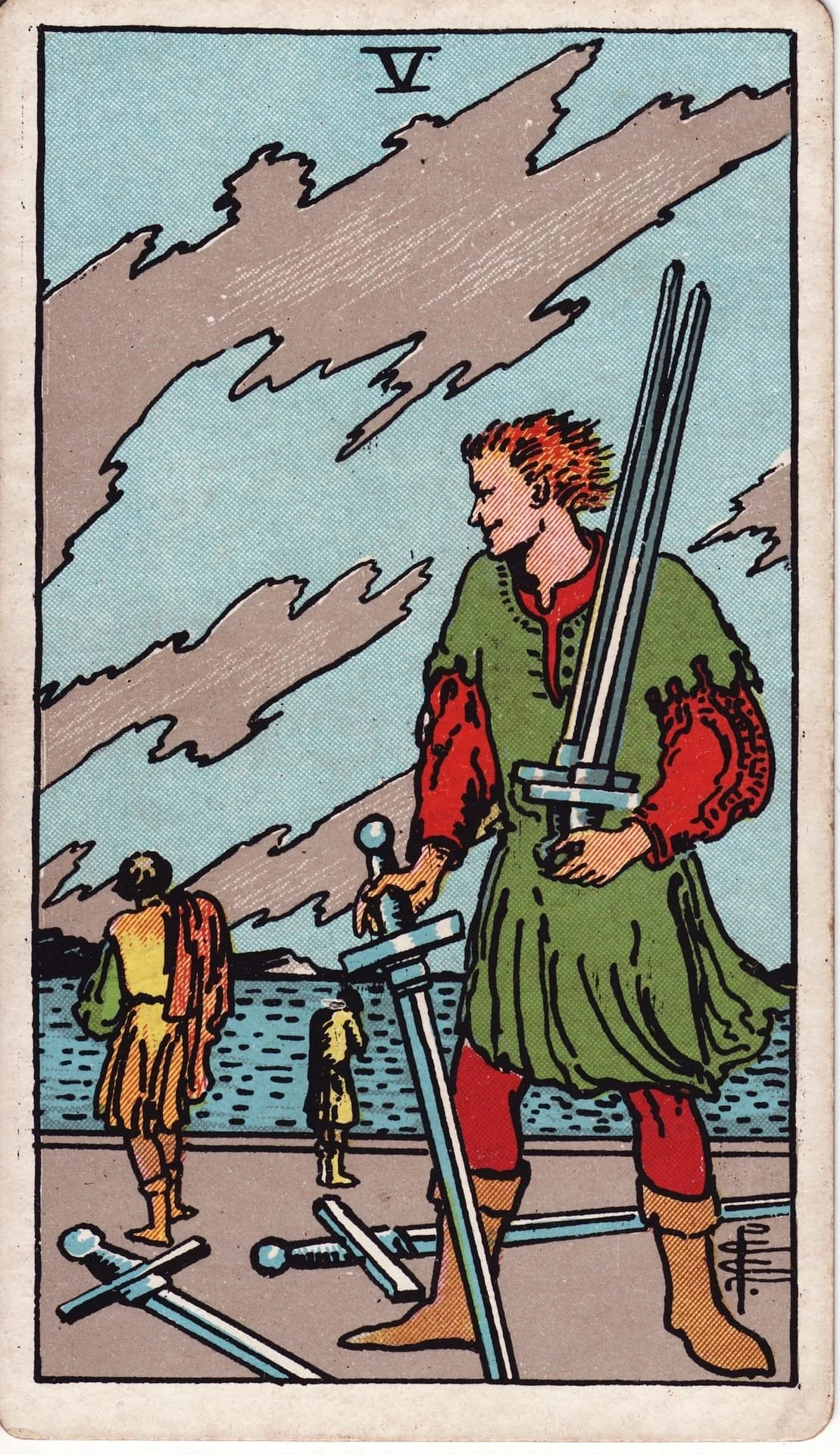
5 of Swords, Rider-Waite Tarot
With this energy, you may find yourself on either side of that scene. You might feel excluded. Or you might be the one who excludes, convinced your perspective is the correct one.
That’s the shadow side of fixed air. Aquarius can hold an idea very firmly. When that firmness becomes rigid, it turns into “I’m right, you’re wrong.” It can become dogmatic or even dominating. If you have strong placements here, it helps to stay aware of that tendency. Hold your convictions but allow room for dialogue.
There’s a real theme of conflict in Aquarius I — conflict in service of truth, principle, and a larger vision beyond the personal ego. That’s what gives this decan its power, and its loneliness.
Tree of Life: Geburah
Now let’s move to the Tree of Life. Each decan connects to a Sephirah on the Tree of Life through the tarot. Every decan has a tarot card, each card has a number, and that number corresponds to one of the Sephiroth in the Qabbalistic system. The creators of the Rider–Waite deck and other esoteric decks understood these correspondences deeply. The imagery wasn’t random. It reflects layers of symbolic meaning drawn from these older mystical systems.
The Tree of Life is a mystical diagram that maps how divine inspiration moves from spirit into form. There’s an image of a lightning flash traveling from the top — from Kether, representing pure divine source — down through the different Sephiroth until it reaches Malkuth, the material world. It’s a symbolic way of showing how an idea or spark of inspiration gradually becomes something real and tangible. Spirit becomes matter. Vision becomes lived experience.

Tree of Life
With Aquarius I, we’re in Geburah, the fifth Sephirah on the Tree of Life. Geburah is often translated as severity or strength. It sits on the pillar of form, and its energy has to do with discernment, correction, and sometimes necessary conflict. It isn’t soft. It clarifies by cutting through what’s excessive or out of balance.
If you look at the number four in the tarot — all the fours — they tend to feel stable. Four is like a square: solid and grounded. Chesed, the fourth Sephirah, carries that expansive but steady energy. There’s order and cohesion. Things are holding together.
When we move from four to five, something changes. Five disrupts the stability of four. It tests it. It asks, “Is this structure still alive, or has it become rigid?” That shift can feel uncomfortable. It can bring tension or conflict. But it also creates movement. Without five, we would stay frozen inside whatever we’ve built.
You can see that pattern throughout the zodiac. When we move from the Four of Cups in Cancer — which can feel emotionally safe and contained — to the Five of Wands in Leo, there’s suddenly competition, expression, creative friction. We leave the comfort zone and step into engagement.
Here, we’re moving from the third decan of Capricorn, the Four of Pentacles, into the Five of Swords in Aquarius I. In the Four of Pentacles, a figure sits tightly on his throne, clutching his coins. He’s secure and protected. He’s holding onto what he’s built. But there’s also constriction. He’s guarding, not growing.
Then we enter the Five of Swords. The conflict becomes mental and ideological. What once felt secure now feels limiting. There’s an inner push: “I can’t stay inside this system anymore. I need to question it. I need to challenge it.” That’s very Aquarius I.
Chesed establishes order and cohesion. Geburah tests that order. It exposes weakness, excess, or imbalance. It cuts away what no longer works. In the Five of Swords, harmony has fractured. Alliances break down. Ideas clash. Even if someone wins, it doesn’t feel entirely clean.
Swords are connected to the mind, to thought, to air. This is ideological conflict — conflict over principles and truth as you see it. Sometimes that truth is expressed sharply or without compromise.
In the image, the central figure stands holding the swords while the others walk away. The sky is unsettled. Something has been gained, but something has also been lost — perhaps friendship, trust, or a sense of belonging.
This connects back to the myth of Ganymede. When you step into a higher vision — when you align with a larger ideal — you may leave behind the world that once nurtured you. That can feel isolating. You gain perspective and elevation, but you may lose the comfort of being among your own.
That’s part of the emotional tone of Aquarius I. There’s strength and clarity here. There’s a willingness to cut away what feels false. And there can also be a quiet loneliness that comes with standing apart.
Chart Example: David Bowie
We can use David Bowie as a vivid example of someone with his rising degree in Aquarius I. He was an English singer, songwriter, and actor, and his influence on music, fashion, and performance has been enormous. A few years ago — maybe five or so — I gave a talk about him at my son’s college because he’s such a fascinating figure. His chart is rich, with so many layers. But if we focus just on the Aquarius I energy, you can really see it play out in his life.
In the early 1970s, Bowie created Ziggy Stardust, an androgynous alien rock star. Ziggy wasn’t just a character he tried on now and then. Bowie fully inhabited him. When he stepped on stage, he became Ziggy. The costumes, the bright hair, the makeup, the theatrical presence — it was a complete persona.
That’s fixed sign energy. There’s total commitment to the identity. And the fact that Ziggy was an alien is very Aquarius I. The theme of exile, of being from somewhere else, of not quite belonging to the ordinary world, is right there. An alien rock star from outer space is such a clear image of the outsider.
Then something distinctly Aquarian happens. Once Ziggy Stardust becomes successful and embraced by the culture, Bowie lets him go. He famously “kills off” Ziggy on stage. He doesn’t cling to the persona once it becomes too established or too defined. Instead, he reinvents himself. Repeatedly throughout his life, he shifts identities — new looks, new sounds, new aesthetics. The Thin White Duke, different musical eras, different visual styles. He keeps challenging expectations. That willingness to disrupt even your own success reflects Aquarius I — breaking out of a structure once it starts to harden.
You can also see the Venusian side of this decan in Bowie. Venus brings beauty, art, and aesthetic sensitivity. Bowie wasn’t only innovative in ideas; he was visually striking. There was a deep appreciation of beauty in his fashion, stage design, and self‑presentation. And interestingly, like Ganymede in the myth, he had a kind of striking beauty that set him apart. There’s something very Venus‑Saturn there — beauty with an edge, a coolness, an otherworldly quality.
Some ancient texts associate this part of Aquarius with artisans who work with copper. Copper is traditionally connected to Venus. A coppersmith in ancient times could support themselves comfortably, but they weren’t like goldsmiths. Gold, linked to the Sun, symbolized royalty and great wealth. Copper is more modest — useful and beautiful in its own way, but humbler.
With placements here, you sometimes see people who bring Venusian qualities — art, beauty, craft — into the world in a more understated or self‑sufficient way. There can be an ability to support yourself through your creativity without needing to stand at the blazing center like the Sun.
This circles back to the myth. Ganymede is lifted up to serve the gods. When you align yourself with a greater ideal — when you serve something beyond your personal ego — there can be support there. With Aquarius I, even though there’s an outsider quality and a stepping away from family or cultural expectations, there can also be quiet support that comes from following your truth. You may not fit the old system, but you can still build a life. You can sustain yourself.
There’s exile, yes. There’s conflict and disruption. But there’s also creative brilliance and the possibility of being sustained by the very vision that sets you apart.
I hope you enjoyed the video. If you did, please like and subscribe. I’ll see you in a few days for Aquarius II. Have a great day.