
Aquarius II: The King Within
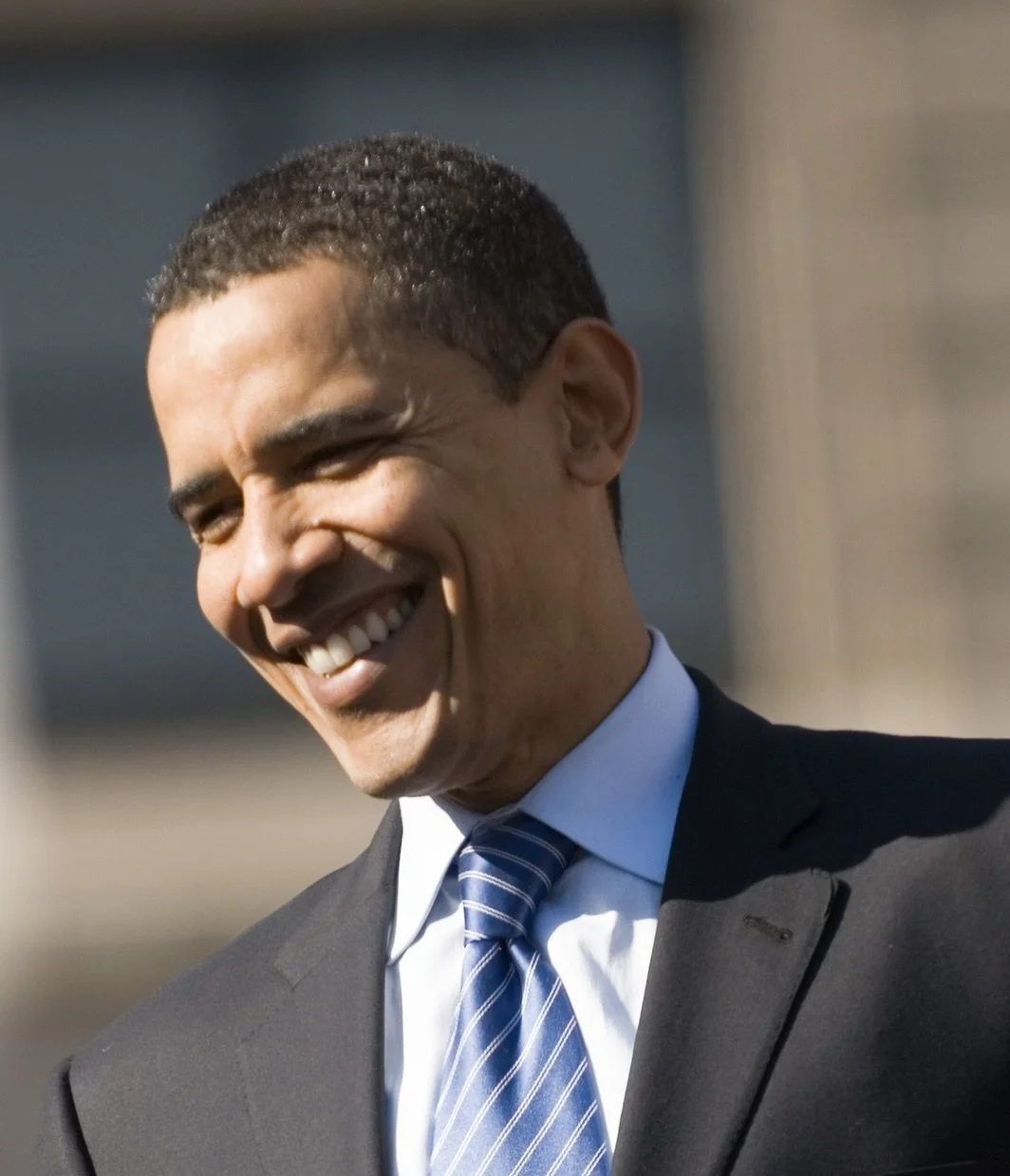
In the video below, I explore Aquarius II, the second decan of Aquarius and the fixed center of the sign. If Aquarius I represents the initial break from the norm and the turbulence that can follow, Aquarius II reflects what happens after that disruption has settled. This is the part of the sign where there is more composure and a stronger sense of internal orientation.
At its core, Aquarius II is about steadiness within movement. The Six of Swords captures this well: a passage from troubled waters into calmer ones, carrying forward what has been learned without reliving the conflict. This decan often raises questions about self containment, independence from approval, and how we hold our position without needing to defend it.
In the video, I explore the Rider–Waite image, descriptions from Ibn Ezra, the Picatrix, and Agrippa, and the placement of this decan at Tifereth on the Tree of Life. I also look at the chart of Barack Obama, whose rising degree falls in this section of the zodiac. His public style reflects many Aquarius II themes: restraint, composure, and leadership grounded in internal authority rather than display.
Transcript (modified and expanded)
Introduction
Hi, this is Cathy Gnatek. I continue my series on the 36 decans of the zodiac today with Aquarius II, the second 10 degrees of the sign. If you check out my video on Aquarius I, you’ll see that the first 10 degrees of the sign have to do with that moment when we realize we need to break out of the structures of the norm, when we move from the known energy of that Capricorn earthiness into the unknown energy of the vast universe. And so there can be a real quality of feeling as though you’re the outsider. Sometimes that can be difficult at the beginning of the sign.
When we move into the second 10 degrees, we’re at the part of the sign that is the fixed energy. It’s the center part, or the fixed part, of the fixed sign of Aquarius. And here, we’re okay with being who we are, no matter how strange, no matter how different, no matter how outside the norm. And what can come along with that for people who have points or planets in this part of the zodiac is that there can be a way in which it threatens, or feels threatening, to the rest of the world to come across somebody who’s confident in being themselves and in stepping out of the norm.
One example chart I have is Barack Obama. He had his rising degree in this part of the zodiac, and I’ll go through that at the end of the video. I’ll also share the tarot card that’s associated with this 10 degrees of the sign, and that’s the Six of Swords. We’ll talk about ancient esoteric texts that are associated with, or that describe, this part of the zodiac. And then we’ll talk about the Tree of Life in Kabbalah, the sephira number six, and how that represents the energy of the sign.
Overall, going through all of this, as well as the example from Barack Obama, will really get us a feel for the energy of this part of the zodiac. I hope you enjoy the video. If you do, it would be great if you could like and subscribe. I’m trying to grow my channel right now.
Aquarius, in General
So let’s start out talking about Aquarius, the sign, just to get us grounded in the sign. Aquarius is ruled by Saturn. Saturn is the last planet we can see with the naked eye, so it has to do with boundaries and restrictions, with what’s inside and what’s outside. Think of it as a demarcation of the universe. We have Capricorn, which is sort of the energy of Saturn where you look at Saturn between here and the Earth, and then we have Aquarius, which is Saturn and the outer universe.
It’s a really good way of thinking about Aquarius, as Saturn facing the universe and wondering what interesting idea it can bring down to Earth from the unknown spheres. That’s one way to understand the sign. Aquarius is an air sign, so it’s going to be about communication and thoughts and ideas. It has a detached quality because it’s ruled by Saturn, and it can have this quality of observing, of looking from Saturn down toward the Earth.
Aquarius is a fixed energy. All the fixed signs have a stability and an enduring quality about them. They’re consistent and persistent. They consolidate the energy and they sustain it. The fixed signs all happen during the middle of the season, and that’s part of the symbolic meaning. You can also look at the Greek myth of Ganymede to get a better understanding of Aquarius. I talk about that in my Aquarius I video. I’ll drop that below if you’d like to explore it a little more deeply.
Decanic Rulers: Mercury and Mercury
But for now, let’s look at the other planets, in addition to Saturn, that are responsible for this part of the zodiac. We have Mercury ruling these10 degrees under the triplicity system, and Mercury also ruling these 10 degrees under the Chaldean order. Mercury is the messenger of the gods, so he has to do with communication. He’s a fast-moving planet, and he’s got flexibility. When you think of the mercurial quality, you can also think about the trickster aspect of Mercury.
If you look at some of the ancient myths about Hermes, you’ll see that he liked to play a few tricks on his big brother, the sun god Apollo. So, the flexibility of mind, the speed of mind, and the intellect can really come into play with this part of the zodiac. People who have points or planets here can have a serious mind that’s willing to look at things from a detached perspective, again reflecting that Saturnian energy.
Tarot: 6 of Swords
When we look at the tarot card associated with Aquarius II, we find the Six of Swords. The image shows a woman seated in a boat with a child, while a man guides the boat from rough, choppy waters toward calmer conditions. The setting is clearly a river, which is important symbolically, because a river implies movement and transition. They are not standing still; they are leaving one place behind and traveling toward another.
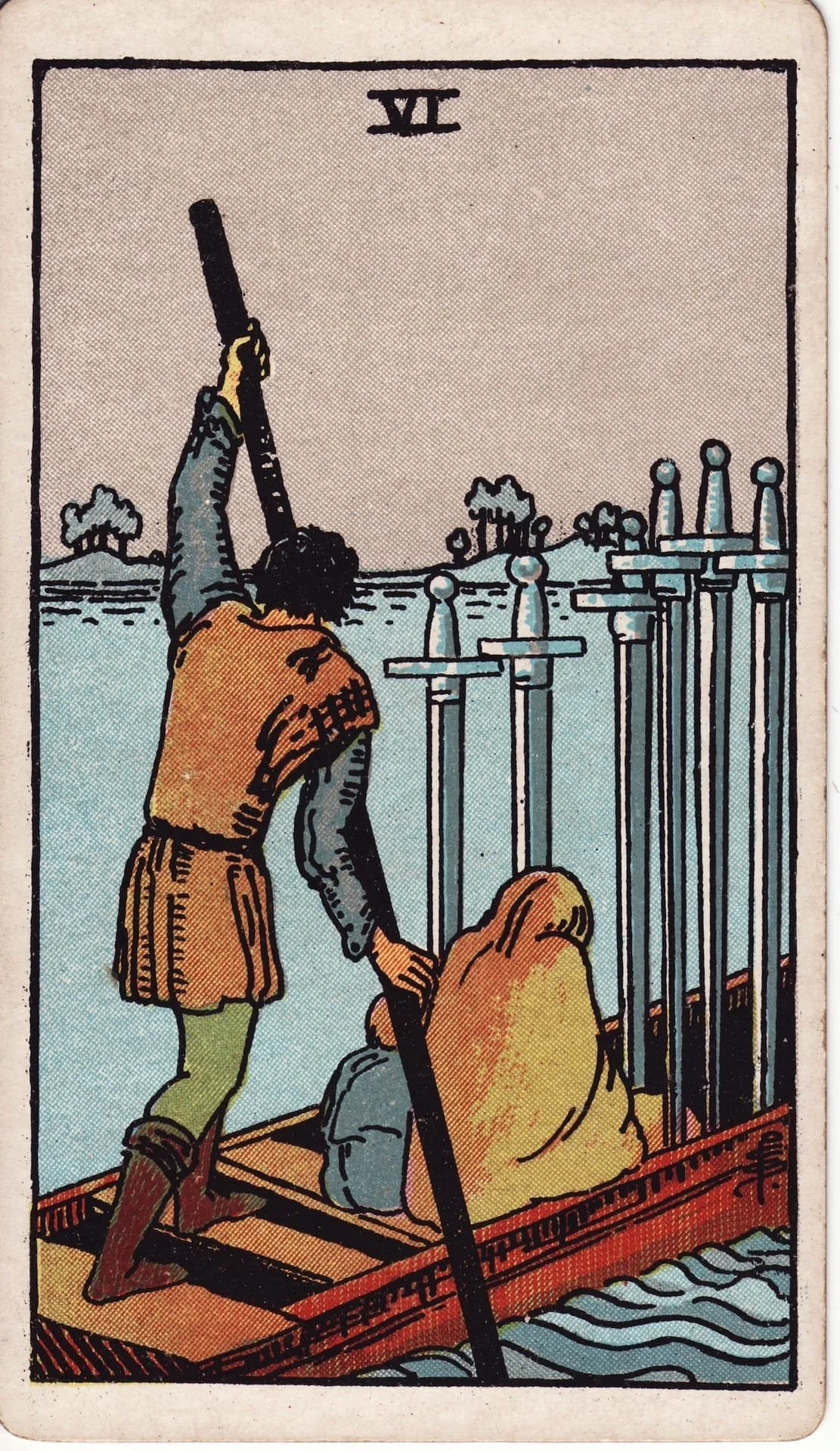
6 of Swords, Rider-Waite Tarot
This image offers several symbolic ways of understanding the feeling of this part of the zodiac. As I mentioned earlier, Aquarius I—the first decan of the sign—can be difficult and unsettled. That sense of disruption is represented by the troubled waters in the background of the card. Breaking away from established norms, which is often necessary at the beginning of Aquarius, can create tension, conflict, or emotional turbulence.
By the time we reach Aquarius II, there has been a shift. The boat has moved away from the rough waters and into a calmer stretch of the river. This reflects the experience of being in the center of the sign, where there is more balance and composure. Symbolically, being in the middle of the river suggests an ability to hold opposing or unfamiliar ideas at the same time. There is comfort with uncertainty, and with not standing on solid ground. Instead of needing firm answers, there is a willingness to move with the flow of life and remain centered within it.
The calmness of the scene reinforces this idea. The blue tones in the card can also be read as representing thought and mental clarity, which aligns with Aquarian intellectual energy. As Rachel Pollack explains in Seventy‑Eight Degrees of Wisdom, the Six of Swords represents a passage from turmoil toward clarity—a movement away from conflict that does not erase or deny what has already been learned.
This is especially meaningful when we remember that the card associated with Aquarius I is the Five of Swords. That card carries themes of separation, rupture, and the conflicts that can arise when breaking free from others or from established expectations. The Six of Swords shows what comes after that struggle: forward motion, integration, and a calmer relationship to what has been left behind.
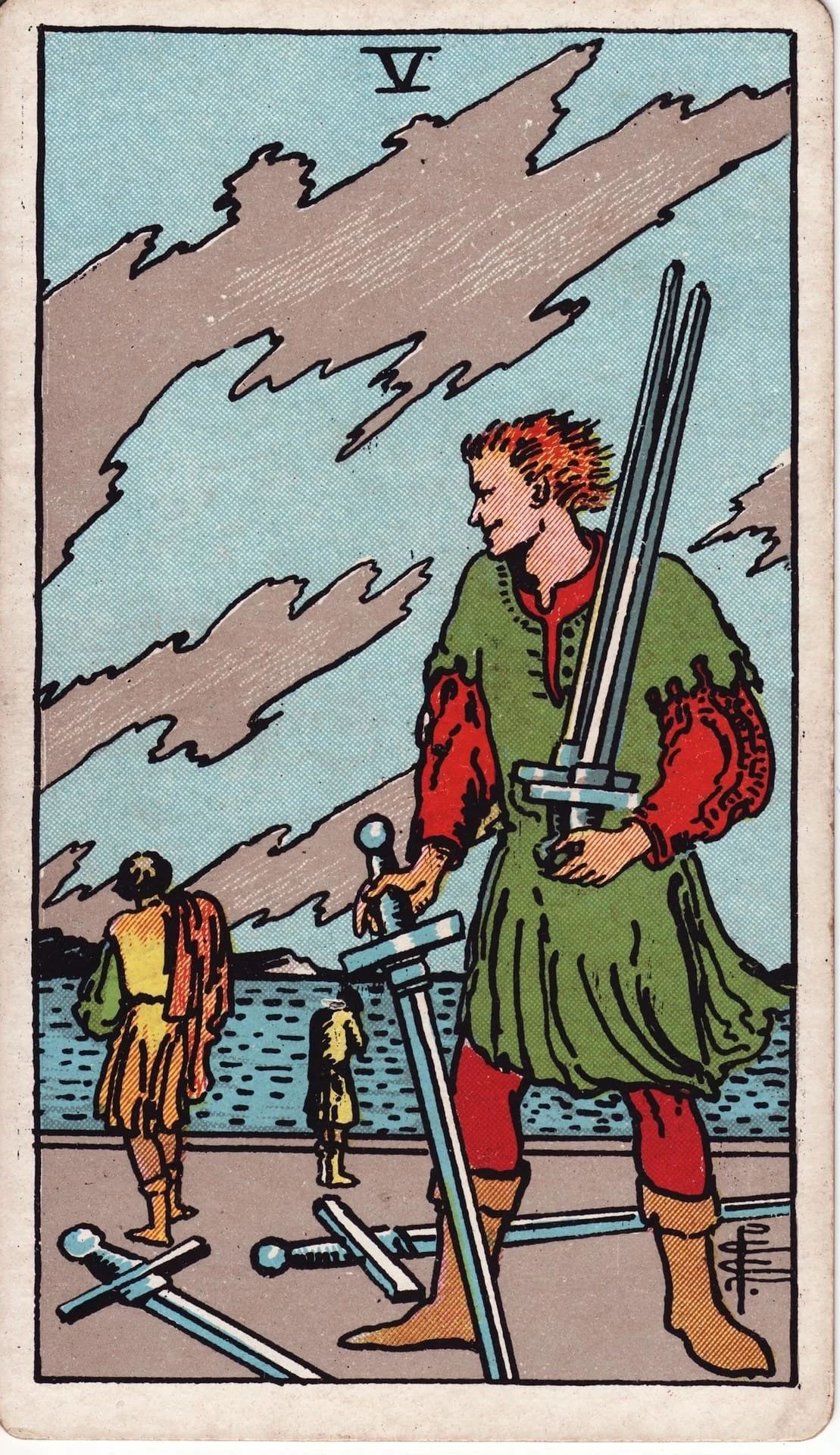
Five of Swords, Rider-Waite Tarot
What we see here, instead, is a sense of inner steadiness. There is an attitude of “I’m okay where I am.” It’s a comfort with standing in one’s own understanding, in one’s own knowledge of how the world works, without needing to prove or defend it. The conflict has already done its work, and now there is less need to push against anything.
As Rachel Pollack describes it, this is the mind functioning as a vessel. It carries knowledge and experience forward, but it no longer needs to carry emotional turbulence along with it. What has been learned is preserved, while the agitation and drama associated with the struggle can be released.
This is where I often think of Barack Obama. One of the nicknames frequently used for him was “no drama Obama,” and it captures this quality well. There is a capacity for emotional steadiness and a calm, measured mind, even while holding responsibility, complexity, and personal conviction. It reflects the Aquarius II ability to move through the world with composure, carrying one’s inner orientation forward without needing to amplify it emotionally.
Ancient Texts
So then we can look at, in addition to the tarot card, the ancient texts that are associated with this part of the zodiac. I’ll read the texts first, and then I’ll give you a little interpretation. Ibn Ezra describes “a very black man whose beard is long, and in his hand are a bow and arrows and purses that contain precious stones and gold.” The Picatrix describes “a man like unto a king who values himself much and who shuns those whom he sees, and this is a face of beauty and of position and of having that which one seeks, of completeness, of harm and weakness.” Agrippa describes “a man with a long beard, and says that the signification of this belongs to understanding, meekness, modesty, liberty, and good manners.”
There’s a lot contained in these descriptions, and it’s important to understand them symbolically rather than literally. For example, when the text refers to a very black man, this is a reference to Saturn. Saturn was traditionally known as the black planet, so blackness here points to Saturnian qualities rather than to anything physical.
When several of the excerpts mention a very long beard, this reflects a medieval symbolic idea about character. A beard takes a long time to grow, so it implies time lived and experience gained. In that context, a long beard was associated with older men, endurance, and the kind of wisdom that develops through having moved through life and its challenges.
We can also think about the fact that a beard partially covers the face. Symbolically, this suggests a quality of self‑containment. People with planets or points in this part of the zodiac often have a strong inner life. There can be a sense of not needing to expose everything internally, not needing to share every thought or feeling with the outer world. That comes from not seeking constant approval. Instead, there is an ability to hold one’s position quietly and remain grounded in one’s own orientation.
There is much more that could be said about these texts, but one phrase I want to highlight is the description of “a man like unto a king who values himself much and shuns those whom he sees.” This points to a very specific quality, and it becomes especially clear when we later compare Aquarius II with Leo II, the opposing decan. Leo II is concerned with being lifted by the outer world, with recognition, admiration, and being seen as a king by others. For a deeper understanding of Leo II, check out my YouTube video on this decan:
Here, we also have a king, but it is an internal one. This is a comfort with one’s own inner authority rather than authority granted from the outside. When the text speaks of a man like unto a king who values himself, it suggests someone who has internal guidance and a strong sense of self‑trust. The idea of shunning others doesn’t necessarily imply rejection, but rather a lack of dependence on external validation.
Because of this, people with planets or points in this part of the zodiac can sometimes feel unsettling to others. They are often confident and comfortable within themselves, and they are not looking to society to affirm their choices or identity. In a culture that is very oriented toward approval, recognition, and external reassurance, that can be disruptive.
There tends to be less of that dynamic of seeking to be filled up by others with prominent Aquarius II placements. They already have a sense of internal completeness. I could go on about this, but I’ll stop here so we don’t linger too long.
Hermetic Qabbalah: Tree of Life
We can also look at the Tree of Life here. The Tree of Life is a mystical diagram from an ancient tradition that represents the descent of divine inspiration into the material world. It describes how something that originates in the spiritual or archetypal realm gradually takes shape and becomes embodied in physical reality.
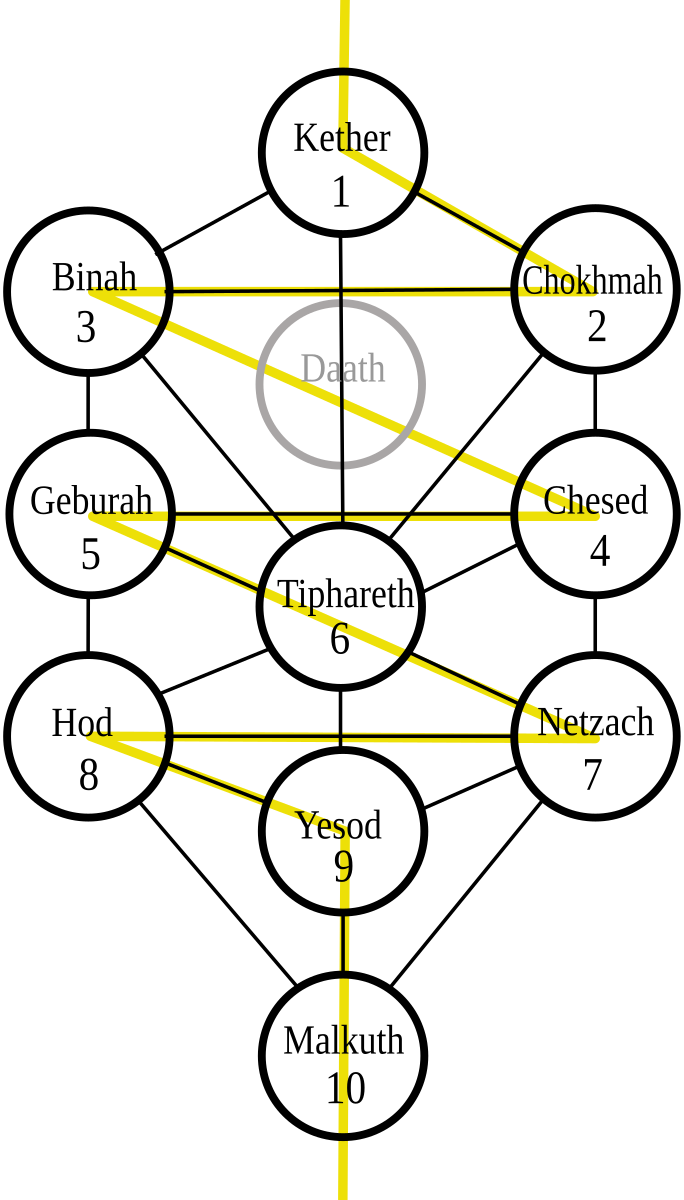
Tree of Life, Hermetic Qabbalah
There is what is known as the lightning flash, which traces the flow of creative energy from the divine source at Kether, the top of the Tree, down through the different levels and into the physical world when it reaches the tenth sephira, Malkuth. This process illustrates how spiritual ideas and principles move step by step into form, linking the divine and the earthly realms.
When we want to understand which part of the Tree of Life corresponds to a particular decan, we look at the tarot card associated with that decan, and specifically at the number of the card. In this case, we are working with the Six of Swords, which places us at Tifereth, the sixth sephira on the Tree of Life. This means we are moving from number five, Geburah, into number six.
Tifereth sits at the heart of the Tree and rests on the central pillar, the pillar of balance. It represents integration, harmony, and coherence. Geburah, by contrast, is associated with force, rupture, and the breaking open of established structures. Five disrupts the stability of four, and six represents what emerges after that disruption has done its work.
If we return to the imagery of the tarot card, we see this clearly. The figure in the boat is no longer in the turbulent waters, but in the center of the river. Likewise, if we think about Aquarius as a fixed sign, and this decan as the fixed portion of that fixed sign, we arrive at the same idea: a centering point. There is comfort with oneself, with one’s position, and with the direction of movement.
In Aquarius, this centering shows up as mental objectivity and purposeful transition. The figure in the Six of Swords moves from troubled waters into calmer waters, carrying what has been learned without needing to relive the struggle. There is a sense of forward motion without emotional excess—again, that “no drama” quality.
This can sometimes appear as a detached relationship to life, which may be difficult for others to understand. If you have points or planets in this part of the zodiac, you may have been told that you’re too detached or that you don’t connect with your emotions. But that’s not really what’s happening. It’s more that you are comfortable being set apart, and you don’t feel compelled to externalize every emotional process.
Aquarius II in Contrast to Leo II
We’ll see this quality again when we return to the example of Barack Obama.
This is where it becomes especially useful to compare, for illustrative purposes, Leo II—the second decan of Leo—with Aquarius II, the second decan of Aquarius. Comparison helps us see qualities more clearly by placing them side by side.
Leo II is ruled by the Sun, the center around which all the other planets revolve. Leo energy is meant to be visible and inspiring. At its core, it says, “Look at me.” And that isn’t meant negatively—it’s inherent to the symbolism. It’s the voice of the king who is meant to be seen, admired, and recognized. There is a natural assumption that admiration belongs to them, and that others are meant to witness their radiance.
Leo II also has Jupiter as its decanic ruler. Jupiter expands whatever it touches. It is associated with optimism, generosity, opportunity, and the receipt of blessings. When you combine the Sun with Jupiter, you get someone who is elevated and applauded by the outer world. This can bring success, recognition, and celebration, but it also carries the risk of hubris—of becoming inflated and believing one truly is larger than life. We see this clearly in the Six of Wands, often called the Lord of Victory, where someone is publicly celebrated and affirmed. I go into this in more depth in my Leo II video (link above).
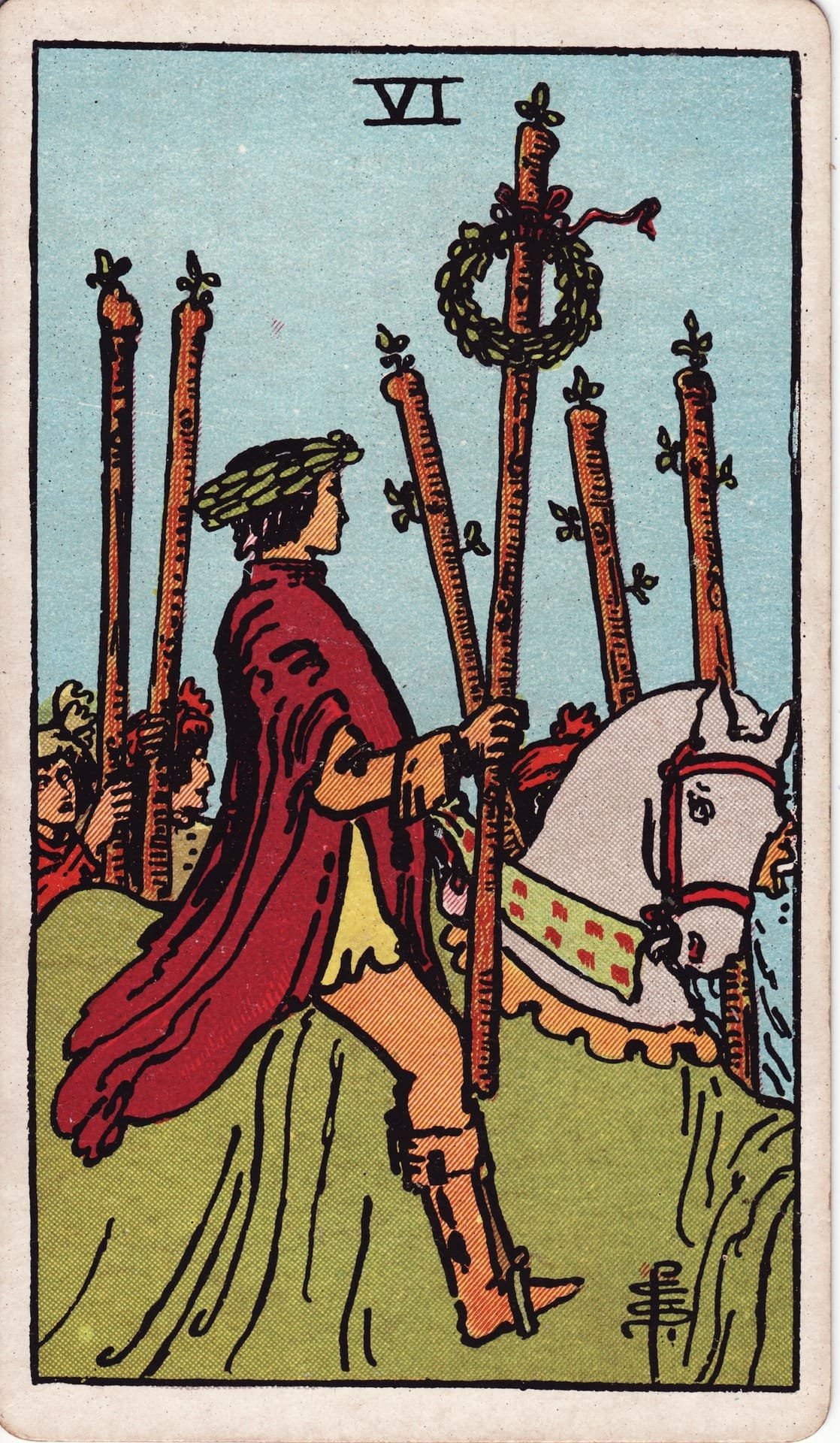
Six of Wands, Rider-Waite Tarot
The energy of Aquarius II stands in direct contrast to this. Instead of saying, “Look at me,” Aquarius II says, “I’m okay being with myself.” Rather than basking in external admiration, it finds steadiness in its own internal thought structures. If those ideas do not align with the prevailing culture or dominant narrative, that is not a problem. There is a willingness to stand apart.
Aquarius II wants to bring its ideas into the world, and there may be hope that those ideas will be received or appreciated. But approval is not required. There is a calm, centered confidence in being different, in being the outsider who carries a new vision forward. This is not withdrawal from the world, but a grounded independence from it.
Example Chart: Barack Obama
We can see this quality very clearly in the chart of Barack Obama, who served as the 44th president of the United States. When we look at his personal style, especially during the 2008 financial crisis, he consistently framed his role as that of a coordinator rather than a central performer. He brought together economists, advisors, and institutions, and emphasized systems, data, and long‑term structural responses. That approach is very characteristic of Aquarius II. There is a distinctly analytical, almost scientific quality to this energy, along with a focus on stability over time rather than dramatic or symbolic gestures.
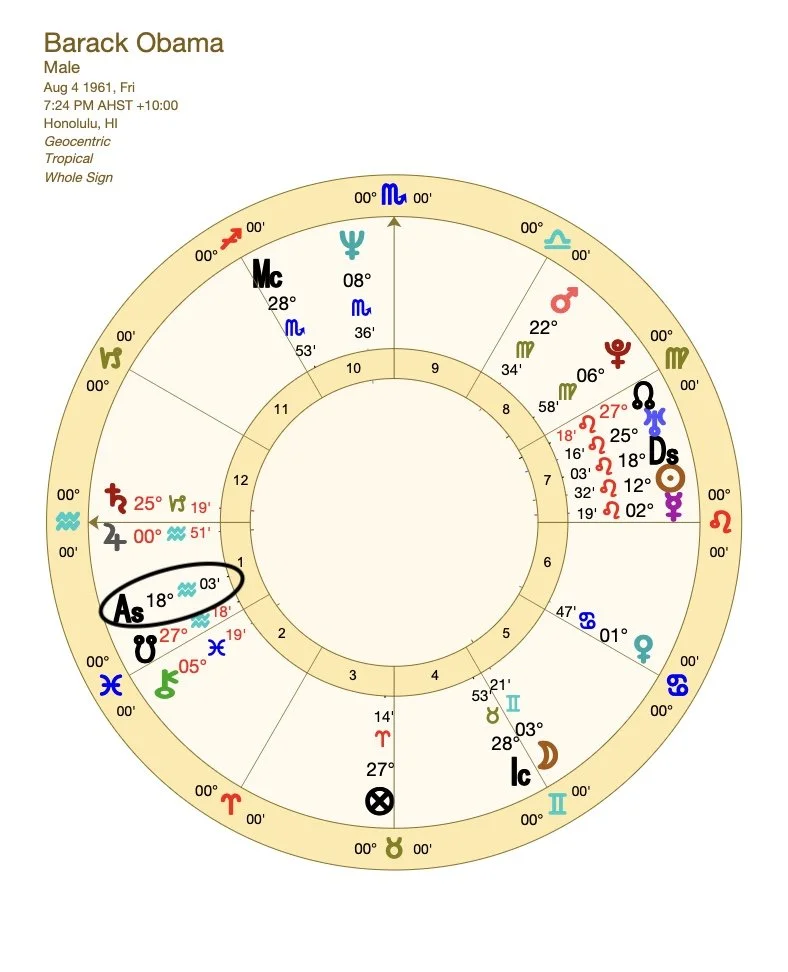
e.
His restraint was particularly striking given the scale and intensity of the crisis. He moved slowly and deliberately. He paused before speaking. He framed events in constitutional, legal, and structural terms, which is very Aquarian in its emphasis on systems and principles. After mass shootings or moments of national grief, he acknowledged pain and loss, but then guided the conversation toward restraint, shared values, and civic responsibility rather than emotional escalation. This reflects Saturnian influence as well, with its concern for containment, responsibility, and long‑term consequences.
Aquarius as a sign is oriented toward all of humanity rather than toward individual expression. It is concerned with collectives, institutions, and future outcomes. Because of this broader focus, Aquarian energy can sometimes come across as distant or impersonal. Critics and detractors—including Cornel West and many media commentators—described Obama as aloof, professorial, or overly detached. These are descriptions that are very commonly applied to Aquarius energy in general.
Even the phrase “no drama Obama” carried a mix of admiration and discomfort. Many people were uneasy with that level of emotional restraint, especially during moments of crisis. But as I mentioned earlier, in contrast to Leo II, which seeks recognition and affirmation, Aquarius II is content without it. Obama’s authority did not come from commanding attention or emotional intensity. It came from staying centered within his own frame of reference.
The Six of Swords reflects this kind of leadership: leadership through steadiness, through lowering the emotional temperature, maintaining balance, and continuing forward without needing to be the focus. For that reason, I think he’s an excellent example of this decan’s energy.
If you have points or planets in this part of the zodiac, I’d love to hear whether this description resonates with your experience. Feel free to share your thoughts or a story or two in the comments. And I’ll see you next time for Aquarius III, the final 10 degrees of the sign. Have a great day.